


Modern and Contemporary Korean Art in Context (1950 - Now)


At Columbian College, scholars and scientists join student researchers to challenge assumptions and
Advance the forefronts of knowledge.
Discovery and innovation are a Columbian College tradition—from our century-long research partnership with the Smithsonian Institution to our state-of-the-art Science and Engineering Hall. As a member of the prestigious Association of American Universities (AAU), George Washington University is a distinguished leader in global research. Whether our scholars are observing celestial bodies light years from Earth or examining the roots of diseases like tuberculosis and malaria, Columbian College faculty and students are uncovering age-old mysteries and finding solutions to 21st-century challenges.
CCAS research centers
and institutes
annual college research expenditures
permanent full-time faculty members
average annual
faculty media hits
Columbian College faculty are prolific authors, awarding-winning scholars, innovators and artists. They are recipients of Guggenheims, Pulitzers and NEH fellowships, and are published in top media outlets and journals.
From labs and classrooms on campus to field sites around the globe, Columbian College students work side-by-side with world-renowned researchers and scholars on a journey of cultural and scientific discovery.
Columbian College is home to top research centers and institutes that explore an array of issues and ideas such as the origins of humankind, the inner workings of the brain and the growth of solar energy.

"Research has definitely broadened what I know about myself and what I want to do in the future. It's really changed my perspective on my career goals, and I'm very excited to keep going on that path now."
Sarah Schrup
BS '19

The Impact of Climate Change on Coastal Ecosystems
CCAS Dean Paul Wahlbeck and Assistant Professor of Biology Keryn Gedan discusses the ways global changes in the climate have impacted Chesapeake Bay's wetlands.

CCAS Dean Paul Wahlbeck discusses with Physics Professor Alexander van der Horst his research on the multi-wavelength observations.
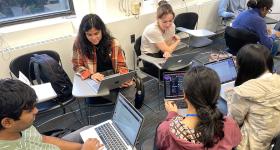
Data Science Students Map a Mission for Ukraine
As winter sets in, Ukrainians face harsh temperatures in war-torn homes. But CCAS students are using their data science skills to map out a rescue plan.

In a video conversation with CCAS Dean Wahlbeck, Elton Professor of Philosophy David DeGrazia discusses "moral status" and the role of ethics in policies relating to AI, healthcare and more.

The Impact of Immigration Status on Wellbeing
CCAS Dean Paul Wahlbeck discusses the impact of immigration status on an individual’s education and wellbeing in a conversation with Elizabeth Vaquera, director of the Cisneros Institute.
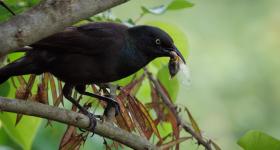
The Cicada Cycle: How the Buzzing Bugs Alter Forest Food Chains
New research by GW biologists reveals that even after cicada emergences subside, the insect invasion continues to eat away at ecosystems.
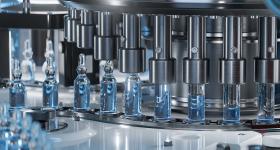
Lab Tech: Is AI the Drug Developer of the Future?
At a summit of leading scholars and researchers, Chemistry’s Jakub Kostal discussed whether using AI technology in drug development is revolutionary—or risky.
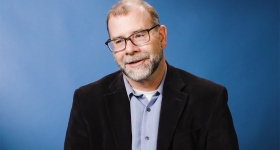
The Ecological Impacts of Cicada Emergences: 3 Questions with John Lill and Zoe Getman-Pickering
Biology's Professor John Lill and former postdoc Zoe Getman-Pickering were interviewed in a video about their research on how cicadas impact our ecosystems.
